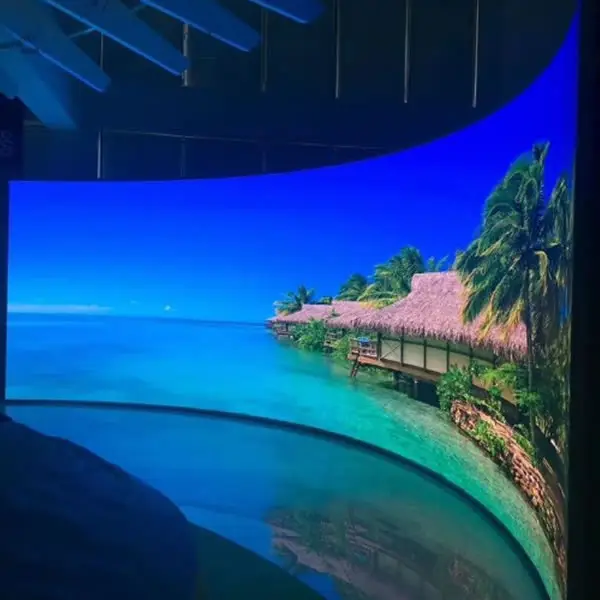
Outdoor advertising has evolved beyond simple digital displays to meet the demands for colorful visuals and personalized content. As people’s needs grow, traditional LED transparent screens and adhesive screens no longer suffice, paving the way for the development of LED soft film screens.
LED Soft Film Screens
Here’s a comprehensive guide to understanding LED soft film screens from six key perspectives:
- What is an LED Soft Film Screen?
- Advantages and Disadvantages of LED Soft Film Screens
- Sizes of LED Soft Film Screens
- Pricing of LED Soft Film Screens
- Installation of LED Soft Film Screens
- Applications of LED Soft Film Screens
1. What is an LED Soft Film Screen?
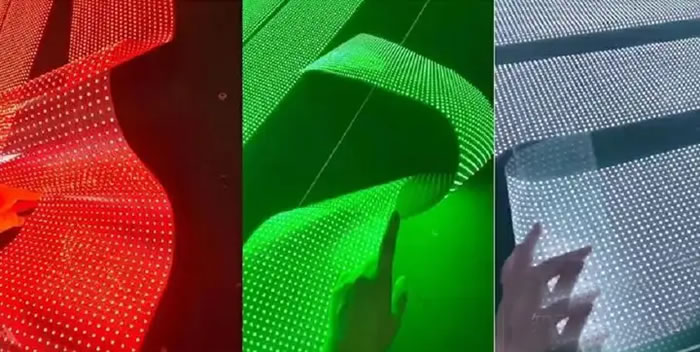
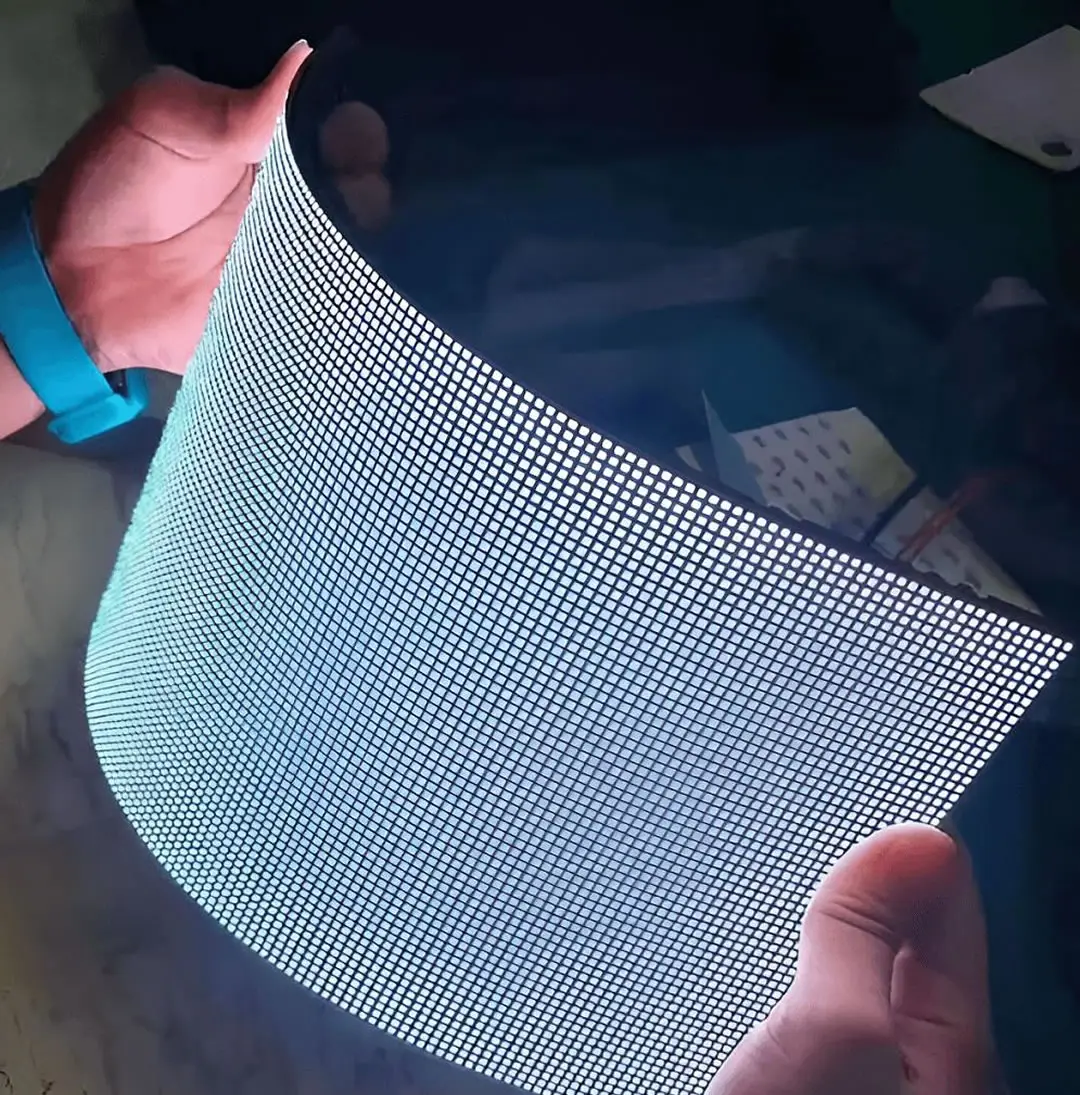
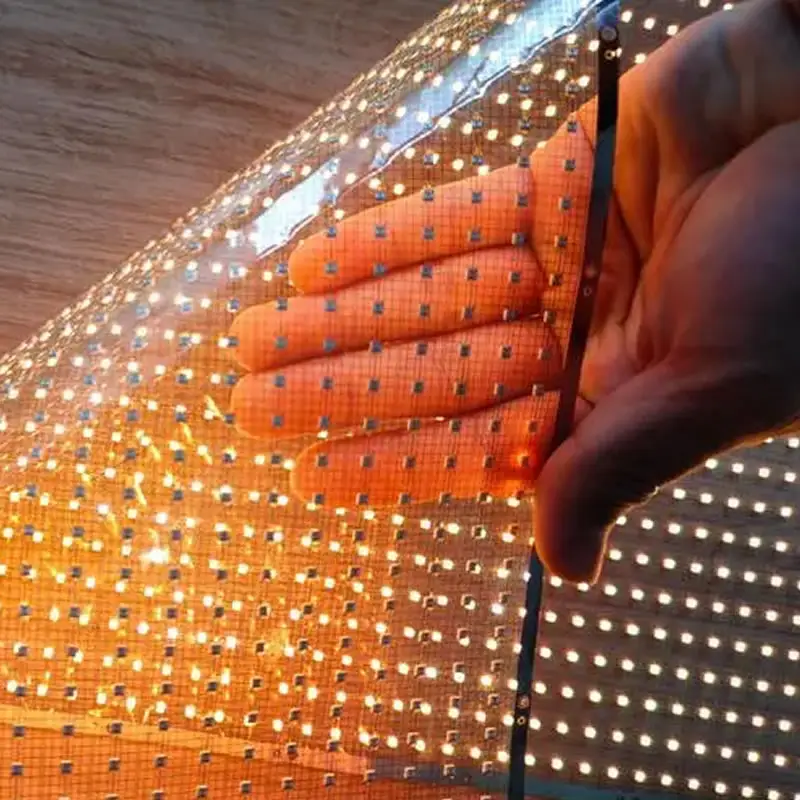
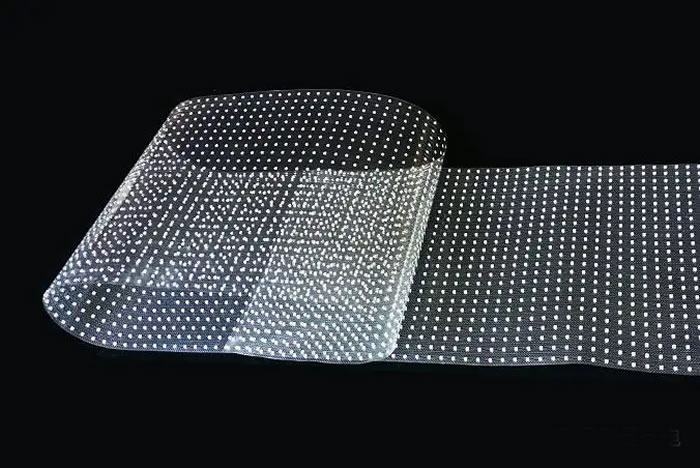
An LED soft film screen is a new type of transparent screen product that combines flexibility, high transparency, and easy installation. It uses specific bare chips with components fixed on a highly transparent PCB film. Through a unique encapsulation process, the display module integrates into a high-transparency film panel with a thickness as thin as 1mm.
2. Advantages and Disadvantages of LED Soft Film Screens
Advantages:
- High Transparency: The screens offer exceptional transparency.
- Lightweight and Thin: These products are designed to be lightweight and thin.
- High-tech Appearance: They present a modern and technological look.
Comparative Advantages Over Traditional LED Displays:
Traditional LED displays are fixed, bulky, and difficult to maintain, with poor heat dissipation. They have high usage costs, long construction cycles, safety hazards, aesthetic impacts on buildings, poor lighting, and regulatory approval challenges.

Disadvantages:
- Limited Viewing Angle: The screens have a narrow viewing angle.
- Higher Failure Rate: There is a higher rate of malfunctions.
- Color Deviation: The screens may exhibit color deviations.
- Exposed Circuitry: Circuits are exposed and prone to oxidation with limited adhesion.
- Non-standard Adhesion: The chip adhesion does not meet standard criteria.
3. Sizes of LED Soft Film Screens
LED soft film screens are assembled into large screens from individual panels. The typical panel sizes include:
- P6.5 Model: Panel size 962 x 416mm
- P4-8, P8, P10, P16, P20 Models: Panel size 960 x 320mm
- P20-40 Model: Panel size 960 x 400mm
Other panel sizes are customizable.
4. Pricing of LED Soft Film Screens
The primary pricing factor for soft film screens is model specifications. For products with the same area and lamp bead configuration, smaller models generally cost more. Besides the model, prices are influenced by customization, configurations, lamp bead material, logistics, installation, commissioning, and after-sales support. For precise pricing, consult with Lianman Optoelectronics.
5. Installation of LED Soft Film Screens
Installing LED soft film screens is straightforward, as they do not require additional steel structures or disrupt existing interior designs. They can be quickly installed by adhering them to glass surfaces.
Installation Steps:
- Clean the Glass: Ensure the glass surface is clean and free from dust and oil. Spray water mist on the installation surface, adding a small amount of detergent for easier sliding.
- Remove the Film: Peel off the centrifugal film from the screen’s front and attach it to the adhesive surface.
- Align and Level: Adjust the alignment and level of the lights. Use tools like a spirit level or laser level for precise calibration.
- Insert Connectors: To prevent the double-sided tape from sticking prematurely, keep the connector and adhesive surface at an angle. Insert the screen’s connecting piece into the plug, push it up, and insert it fully.
- Connect Modules: Attach the modules and control box. After verifying the connections, power the main source and connect the external signals.
Installation Tips:
- Placement: Avoid having the display area blocked by objects or structures to ensure an optimal viewing experience.
- Structure Confirmation: During the initial design phase, the manufacturer should clearly specify the building structure type, size, and screen location in the construction drawings, confirming these details before installation.
- Installation Guidelines: Maintain constant communication with the construction team to monitor installation progress. If discrepancies arise between construction and planning, adjust plans promptly to ensure successful installation.
6. Applications of LED Soft Film Screens
- Glass Windows
- Glass Curtain Walls
- Automotive Applications
- Railings and Elevators
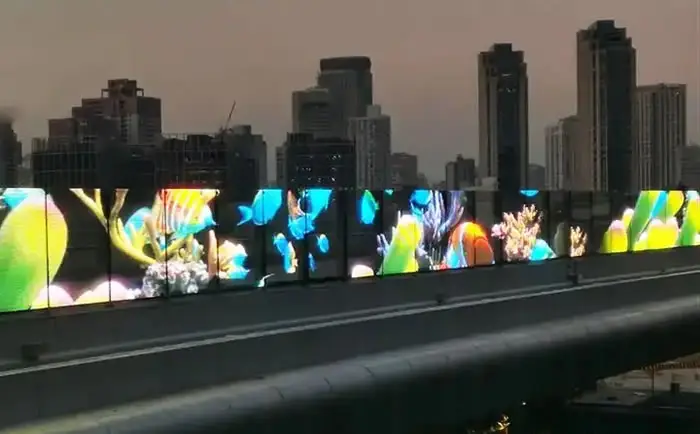
LED soft film screens represent a significant advancement in display technology, offering versatile and innovative solutions for a wide range of applications. Their ability to integrate seamlessly into various environments makes them a popular choice for businesses looking to enhance their visual communication strategies. As technology continues to evolve, LED soft film screens will undoubtedly play a crucial role in shaping the future of digital displays.